


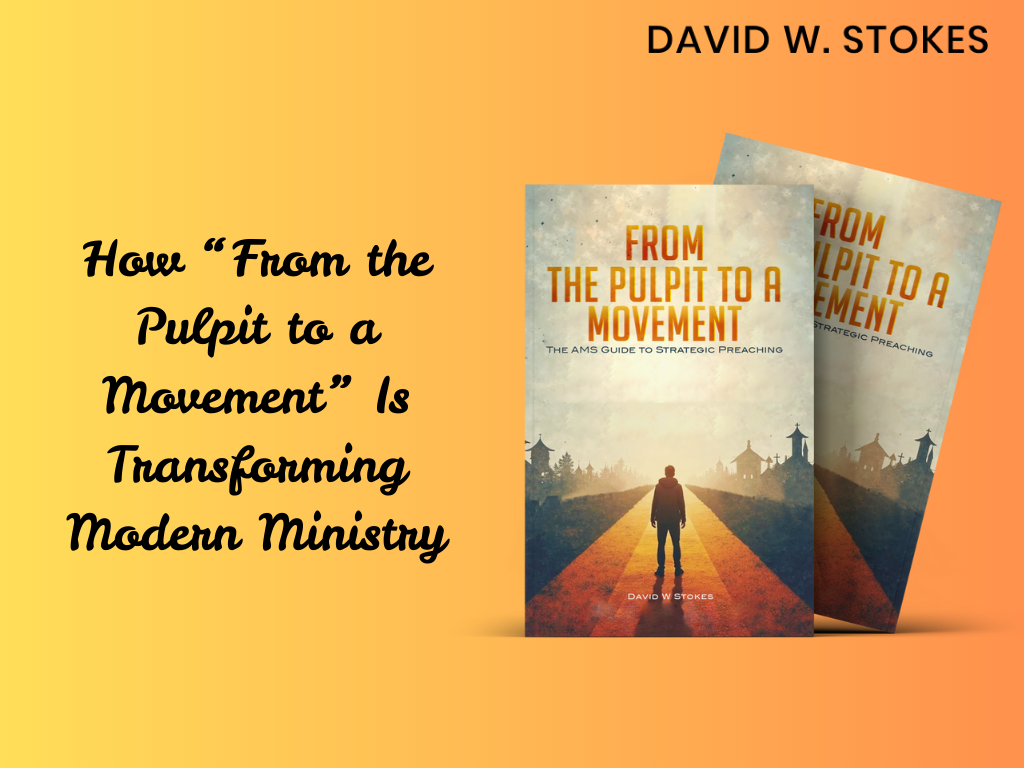
In a fast-paced world where churches are finding it difficult to keep up with cultural change, reduced involvement, and overworked leadership, a single book is emerging as a breath of fresh air to the ministry leaders. The book, From the Pulpit to a Movement by David W. Stokes, is transforming the preaching, leadership, and church renewal of pastors, transitional leaders, and associational strategists. It is not a simple ministry book, it is a blueprint of change that is soft yet powerfully making a difference in the scenery of contemporary church leadership.
The only reason that makes this book so important is the main premise that preaching is not only a weekly affair, but it is a motor that makes something move. Over the years, the church leaders have been dividing preaching and leadership and viewing sermons as spiritual encouragement, but not as strategic communication. Stokes opposes that split. He contends that the pulpit is the most powerful leadership platform in the church, and when employed strategically, it can help bring congregations together, define mission, and initiate long-term change.
This message has never been more significant at a time when most churches are plateauing or even shrinking. The book From the Pulpit to a Movement welcomes leaders to rediscover the strength of preaching, but in relation to leading as a pathfinder rather than as a trumpeter. Passion will no longer keep modern-day ministry going; it must have clarity, alignment, and purpose. Stokes teaches pastors how to make sermons that are not solely inspirational in the short run but define a group of believers over the next few years.
Stokes’ idea of strategic preaching- Spirit-led communication meant to bring a church to health, unity, and mission is one of the most radical things that the book offers. It is not preaching because it is time to fill or to cover a weekly box. It is preaching that deliberately gathers momentum.
Stokes demonstrates that a congregational identity can be strengthened, challenges can be overcome, and revitalization can be promoted through the application of message themes, sermon series, annual preaching calendars, and so on. As a part of his framework, every sermon is a stepping stone, every row of sermons a path, and every calendar a way to get renewed.
This is a very practical approach that is being found by church leaders in various positions. The book is also being used by Association Mission Strategists (AMSs) as a way of guiding congregations in periods of instability. Interim pastors are gaining new assurance in preaching healing, direction, and unity. Retired ministers are rediscovering the way their wisdom can still be relevant to churches and bring revival. The book Pulpit to a Movement has become an asset to leaders of all levels within the ministry, and it reaffirms that the vocation of preaching has no deadline, just that its scope of operation changes.
The difference between the book and other traditional pastoral resources is how Stokes manages to combine the ancient wisdom of the bible with the current reality of leadership. He cites such leaders as Moses, Nehemiah, Paul, and Jesus, leaders who employed preaching to mobilize. Their communication skills changed the vision of individuals as well as whole societies. Stokes wants to say that this model is equally relevant in the present day: preaching strategically and intentionally, pastors will be able to create a movement that will go well beyond Sunday mornings.
The book offers guidance in a world where churches are mostly confused about what they are and their future. It teaches pastors the way to bring about revival, not by using programs and gimmicks, but by caring, Spirit-directed communication that establishes trust, unity, and mission focus. The contemporary ministry is complicated, yet Stokes demonstrates that it may be significant, effective, and highly satisfactory, too, provided that leaders know how to transform sermons into movements.
Pastors who miss passion and leaders who are looking to find a strategy that works. From the Pulpit to a Movement is not just a book; it is a timely and transforming invitation to lead in a different way.